
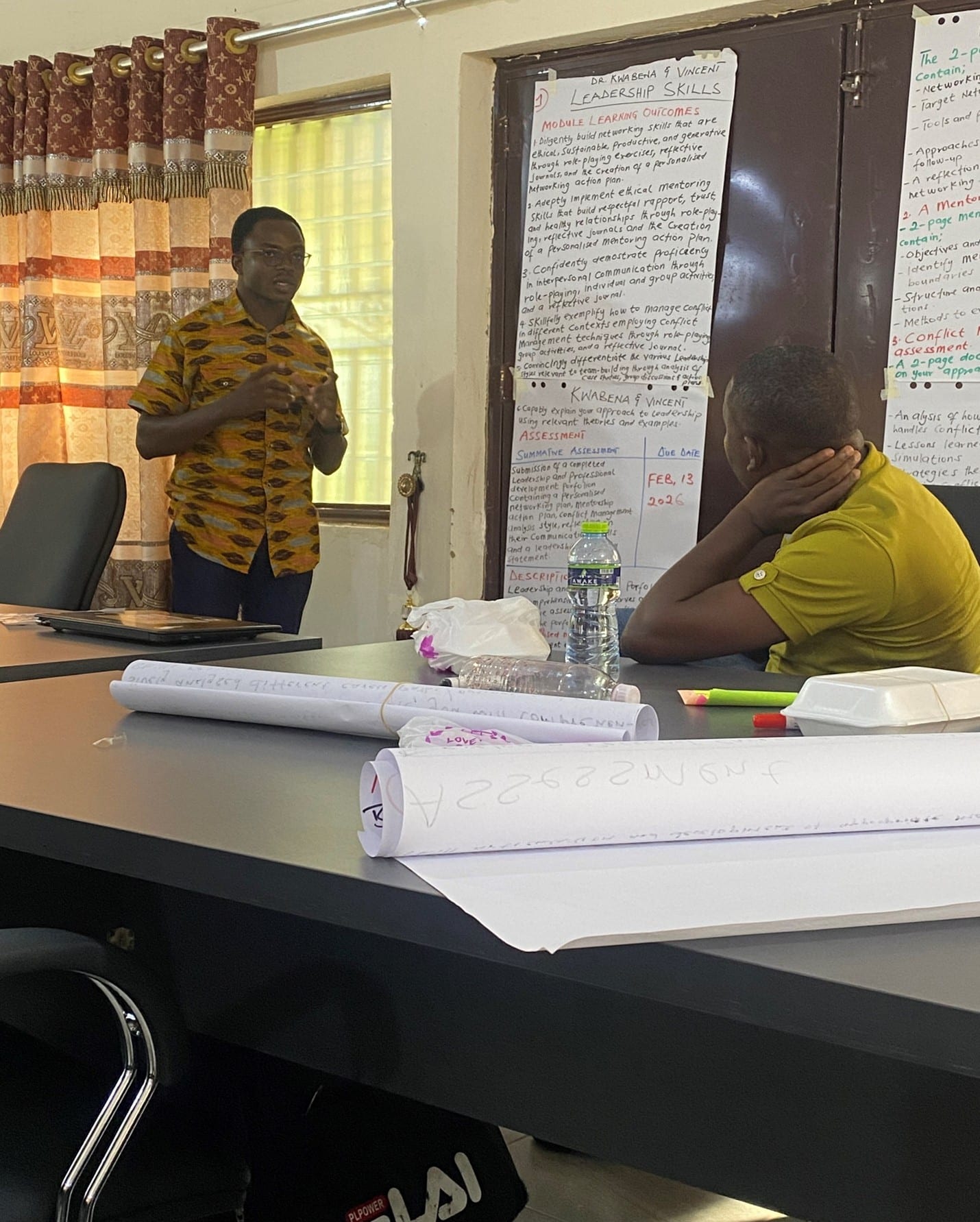
Graduate Professional Skills training at the University of Business and Integrated Development Studies
As part of the Commonwealth Scholarship Commission’s (CSC) ongoing case study series showcasing the global impact of its alumni, we are delighted to present the work of Vincent Buobodaare Dari, a Ghanaian spatial planner whose Scholarship-enabled expertise is driving climate‑smart planning, community resilience, and inclusive development across northern Ghana.
Vincent currently serves as the Acting Head of the Physical Planning Department at the Daffiama‑Bussie‑Issa District Assembly and is Co‑Founder and Director of Research and Development at the MAGVIN Research Institute, a non-profit organisation providing research, GIS services, and community development support. His work centres on strengthening climate resilience, spatial planning, digital inclusion, and livelihood opportunities for rural communities.
He was awarded a Commonwealth Shared Scholarship in 2019 to study an MSc in Geospatial and Mapping Sciences at the University of Glasgow. The programme deepened his technical skills in geospatial analysis and mapping, while also broadening his leadership capabilities and cultural awareness. Vincent notes that studying in an international cohort strengthened his confidence and shaped his approach to teamwork and managing diverse perspectives. One experience he describes as transformative was understanding how planning institutions operate in different contexts and how this exposure sharpened his resolve to contribute meaningfully back home.
‘I believe that having been a beneficiary of this generous Scholarship and with all the exposure I have received, I should be able to give back to my society and also on our communities.’
Since returning to Ghana in 2020, Vincent has applied his skills across public service and civic entrepreneurship. As district planner, he led the preparation of 15 Community Land Use Maps (CLUMs) and Community Action Plans (CAPs) under the EU‑ and BMZ‑funded Resilience Against Climate Change (REACH) project, embedding community priorities into formal district planning cycles. These plans later supported tangible investments, including eight solar mechanised boreholes—improving access to clean water for an estimated 21% of the district population—and climate‑smart agricultural initiatives benefiting a further 22%.
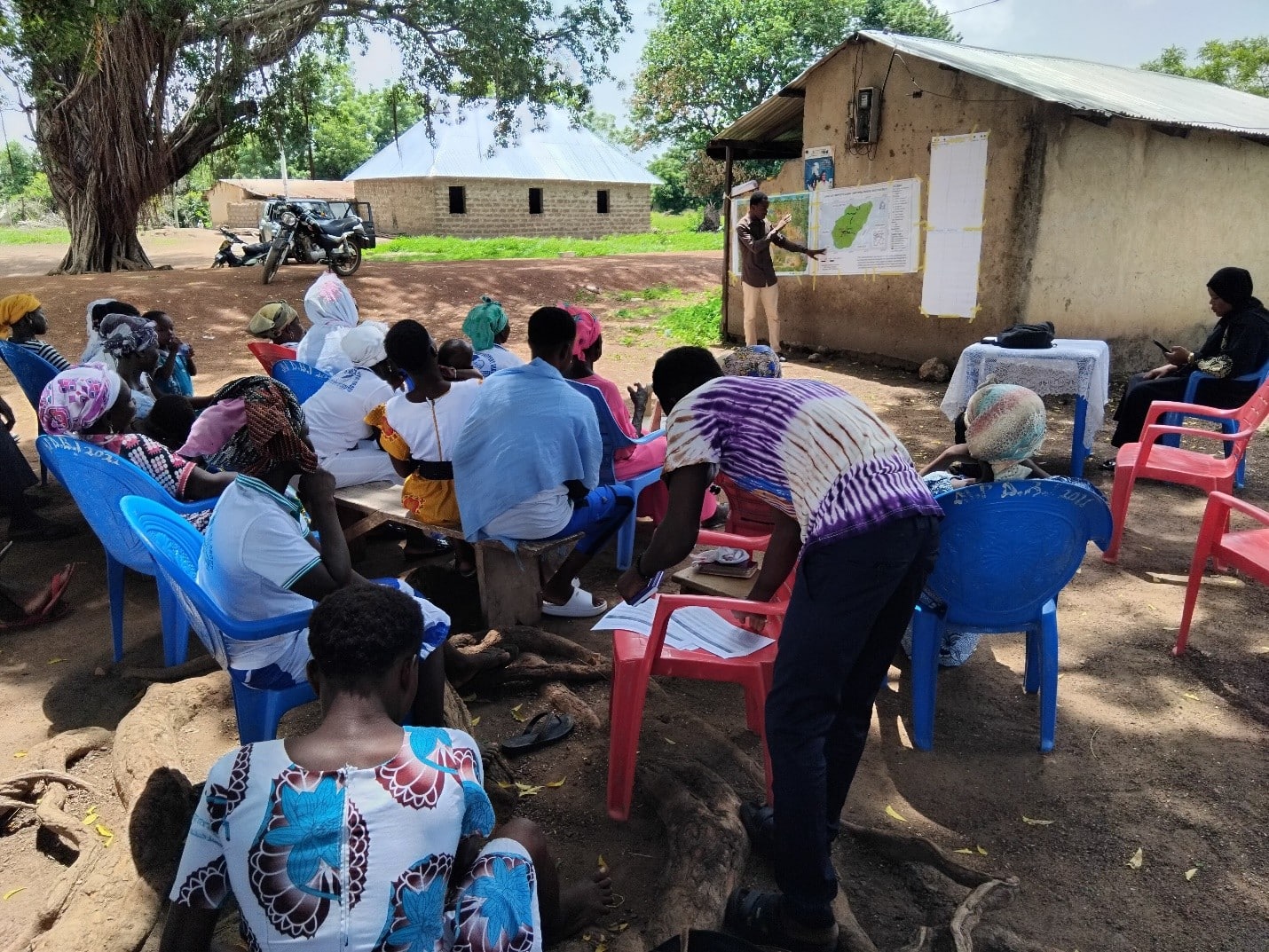
Community Land Use Map validation and Community Action Planning
Through MAGVIN Research Institute, Vincent has trained over 1,200 farmers—85% of them women—across 45 communities, delivered GIS capacity building for young planners, and expanded digital literacy for rural students.
For Vincent, the most significant change resulting from the Scholarship is his ability to realise his early aspiration to create an organisation dedicated to sustainable community development.
‘Today, I am happy to share that through MAGVIN Research Institute, I am living that dream as I provide technical support on key development projects and support rural communities in agriculture, agribusiness and education.’
Vincent’s work directly contributes to CSC’s development themes on science and technology for development; promoting innovation and entrepreneurship; access, inclusion and opportunity; and strengthening resilience and response to crises, as well as to SDGs 2 – Zero Hunger; 5 – Gender Equality; and 13 – Climate Action.
Read about Vincent Dari’s case study here.