
In Malawi, entrenched gender inequality intersects with economic fragility and intensifying climate shocks—leaving women disproportionately exposed to poverty, exclusion from decision-making, and gender-based violence. These challenges were starkly visible during Cyclone Freddy in March 2023, which affected 2.27 million people, displaced nearly 660,000, and destroyed 50,000 hectares of farmland, with damages estimated at more than USD 500 million. Yet women’s needs and perspectives were too often absent from planning, response, and recovery.
Tione Taweni Chakhwantha, a 2021 Commonwealth Alumnus, has become a catalyst for gender-responsive development and resilience. After completing an MA in Gender and Development at the University of Sussex through a Commonwealth Scholarship, she strengthened her ability to translate lived experience and community insight into research, advocacy, and practical action. As the Founder and Executive Director of the Centre for Human Rights and Community Development (CHRCD), she supports women to build economic agency and leadership at the grassroots, while also helping elevate gender inclusion in policy conversations nationally.
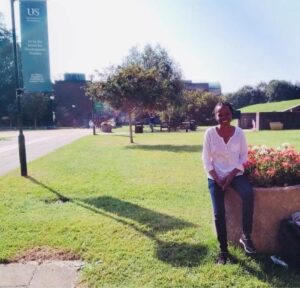
Tione at the University of Sussex
Through Village Savings and Loans Associations (VSLAs), Tione has advanced a self-financing model that enables women to save collectively, access small loans, and invest in micro-enterprises—from baking and tailoring to livestock rearing. Around 50 women have participated in VSLAs, and more than 100 women have received training in financial literacy, entrepreneurship, and leadership, with 75% of surveyed participants reporting they launched small-scale enterprises within six months. In parallel, Tione has contributed to gender-responsive disaster risk management research and dialogue following Cyclone Freddy, advocating for stronger coordination and meaningful inclusion of women in disaster preparedness and recovery. As Vice-President of the Malawi Commonwealth Alumni Association Network (MCAAN) and a member of the Commonwealth Alumni Advisory Panel, she also mentors others and widens access to opportunities—helping ensure that more Malawian women can lead change in their communities and beyond.
Together, these efforts show how a Commonwealth Scholarship can build individual leadership that delivers measurable community-level change—linking women’s economic agency, inclusive governance, and climate resilience.
Read about Tione Taweni Chakhwanta’s case study here.