
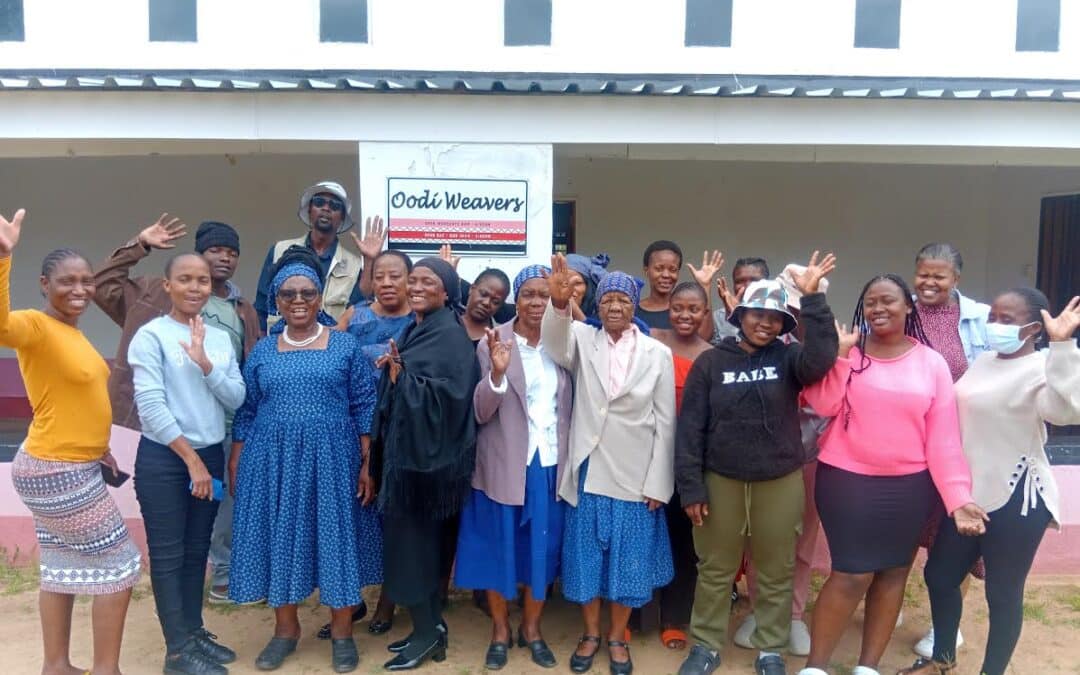

Dr Keiphe Setlhatlhanyo
The Oodi Weavers preserve Botswana’s cultural heritage through handwoven tapestries that depict traditional Setswana life and embody generations of indigenous knowledge. Like many craft communities, however, they face challenges including limited product diversification, restricted market access, and gaps in business development capacity.
In October 2025, Commonwealth Alumnus Dr Keiphe Setlhatlhanyo launched a six-month, design-led programme to help the Oodi Weavers strengthen their skills, share indigenous knowledge across generations, and adapt their craft for contemporary markets.
Dr Keiphe Setlhatlhanyo is a Lecturer in the Department of Industrial Design and Technology, Faculty of Engineering and Built Environment, University of Botswana.
Strengthening indigenous weaving heritage
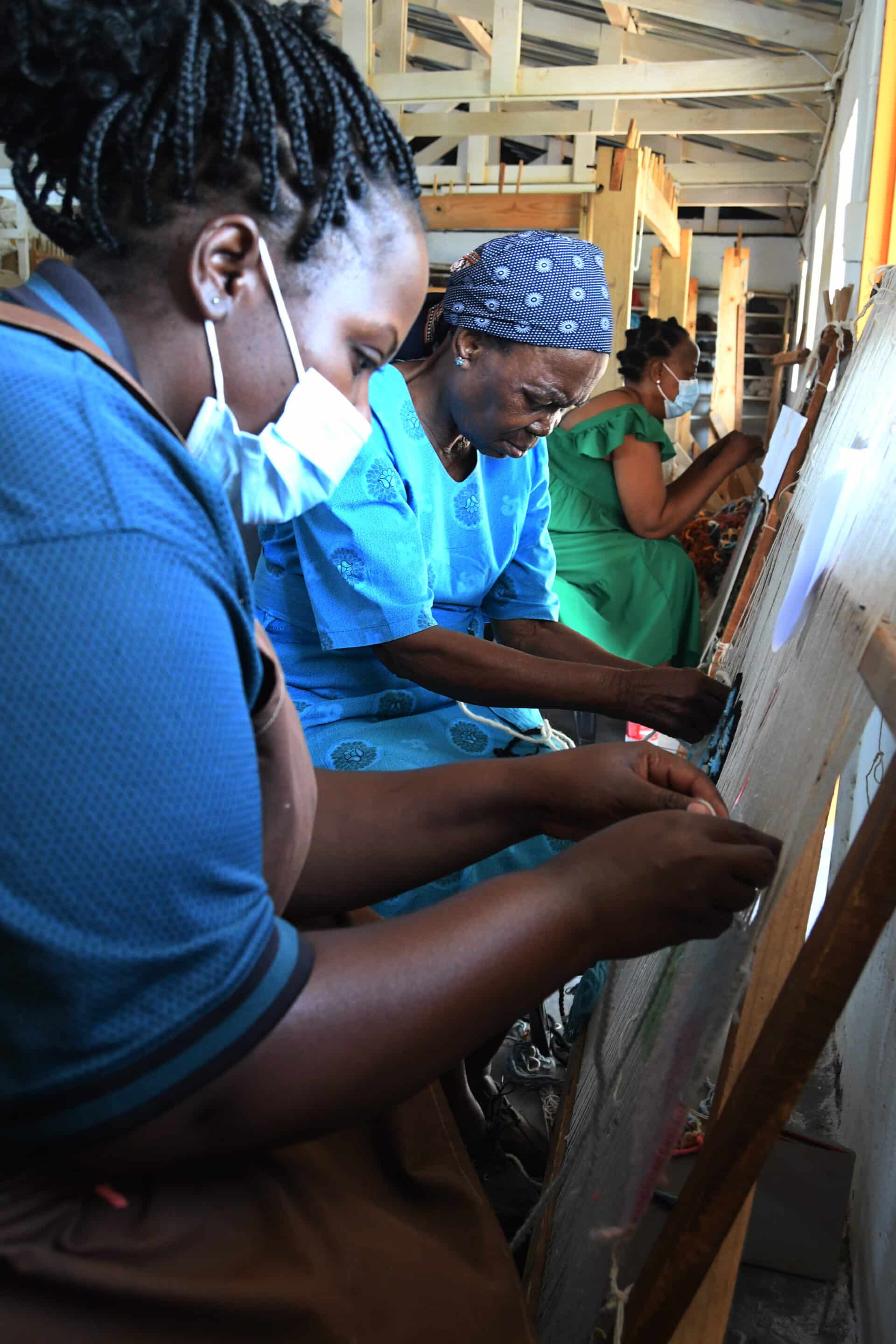
Oodi weavers
The Oodi Weavers preserve Botswana’s indigenous weaving heritage, but economic pressures threaten the sustainability of traditional weaving practices.
Dr Setlhatlhanyo led a design-led community engagement initiative connecting indigenous weaving knowledge with contemporary design. Through community mapping, co-creation, skills development, and public showcases, the three-phase programme supported innovation, cultural preservation, and wider market access.
By recognising the weavers as knowledge holders and creative entrepreneurs, the initiative created opportunities for sustainable livelihoods while keeping Botswana’s weaving heritage relevant.
Five Oodi master weavers shared their indigenous weaving knowledge with five younger community members. Dr Setlhatlhanyo recruited four volunteers, alumni of Industrial Design from University of Botswana(Changu Maleke,Tlamelo Tumedi, Tefo Mokaro,Maduo Moeng), further strengthening collaboration between the university and the community. The initiative engaged 15 participants in total.
Elevating the Oodi Weavers’ profile
The project culminated in an exhibition attended by over 60 people from academia, design, policymaking, entrepreneurship, media, and the public. Media coverage and subsequent exhibitions extended its reach, raising the weavers’ profile and connecting their rural craft communities with wider creative and economic networks.
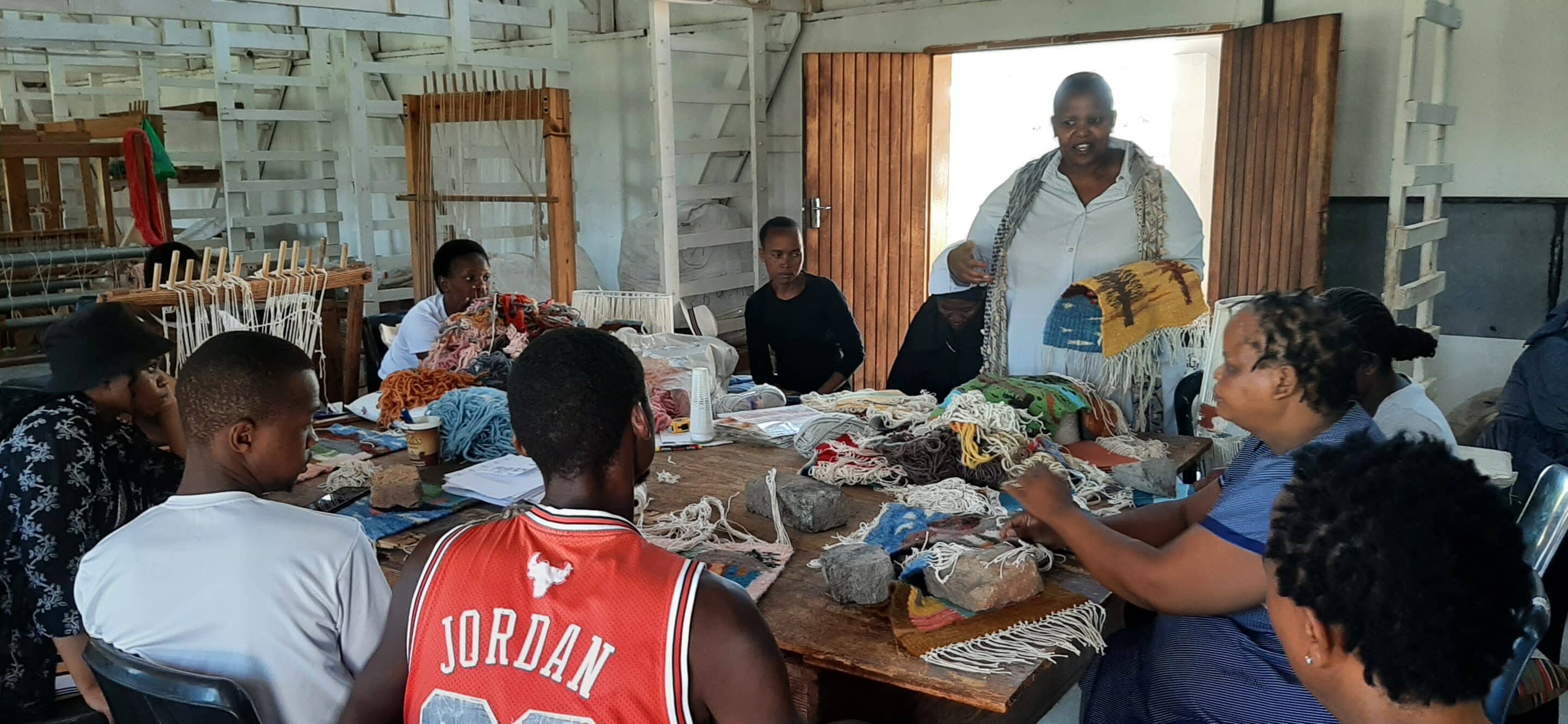
Dr Setlhatlhanyo with the participants
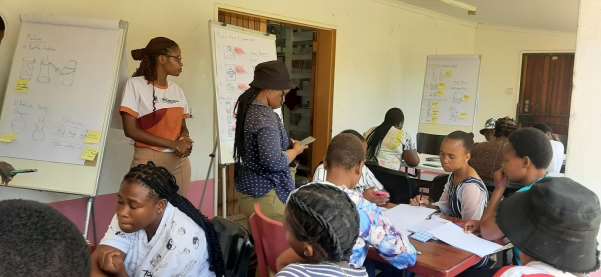
Co-design group exercise sessions led by design volunteers
Dr Setlhatlhanyo engaged stakeholders across the creative, policy, academic, business, media, and diplomatic sectors. They included Ditsile Selemogwe, Human Capital and Policy Implementation Strategist; Bonolo Magowe and Jenamiso Robert, British High Commission Botswana; Basadi Masimolole, Bash Konnector Digital Marketing; Tshepiso Gabonthone, Curator, National Museum and Monuments; Mavis Modise, Business Development Officer; and Patrick Dichabeng, Head of Department, Industrial Design and Technology. Their involvement validated the Oodi Weavers work, increased its visibility, and opened opportunities for collaboration, knowledge exchange, market growth, and future partnerships.
Three-phase strategy of transforming heritage into opportunity
Dr Setlhatlhanyo began with an immersive research phase to build trust and understand the weaving ecosystem. Through interviews, focus groups, and observational learning, she documented traditional techniques, cultural significance, production processes, pricing structures, and market challenges. This informed the development of the Creative Ecology Mapping Framework, which mapped the value chain, market opportunities, and skills landscape, creating a foundation for collaboration and co-ownership with the weavers.
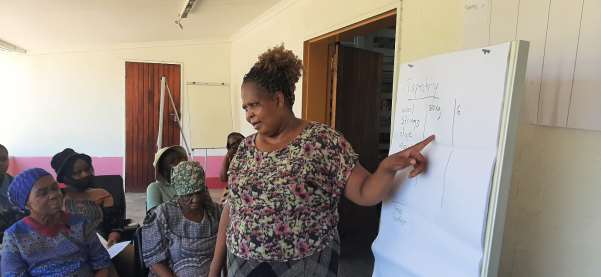
Dr Ganamotse explaining steps of costing and pricing workshop
Building on these insights, Dr Setlhatlhanyo delivered the Design Evolution Workshop Series, bringing together design thinking and indigenous knowledge. Participants explored new product applications, adapted traditional patterns for contemporary markets, and improved product quality. Dr Gaanamotse, an entrepreneurship expert and University of Botswana lecturer, also provided training on costing, pricing, business management, and market access.
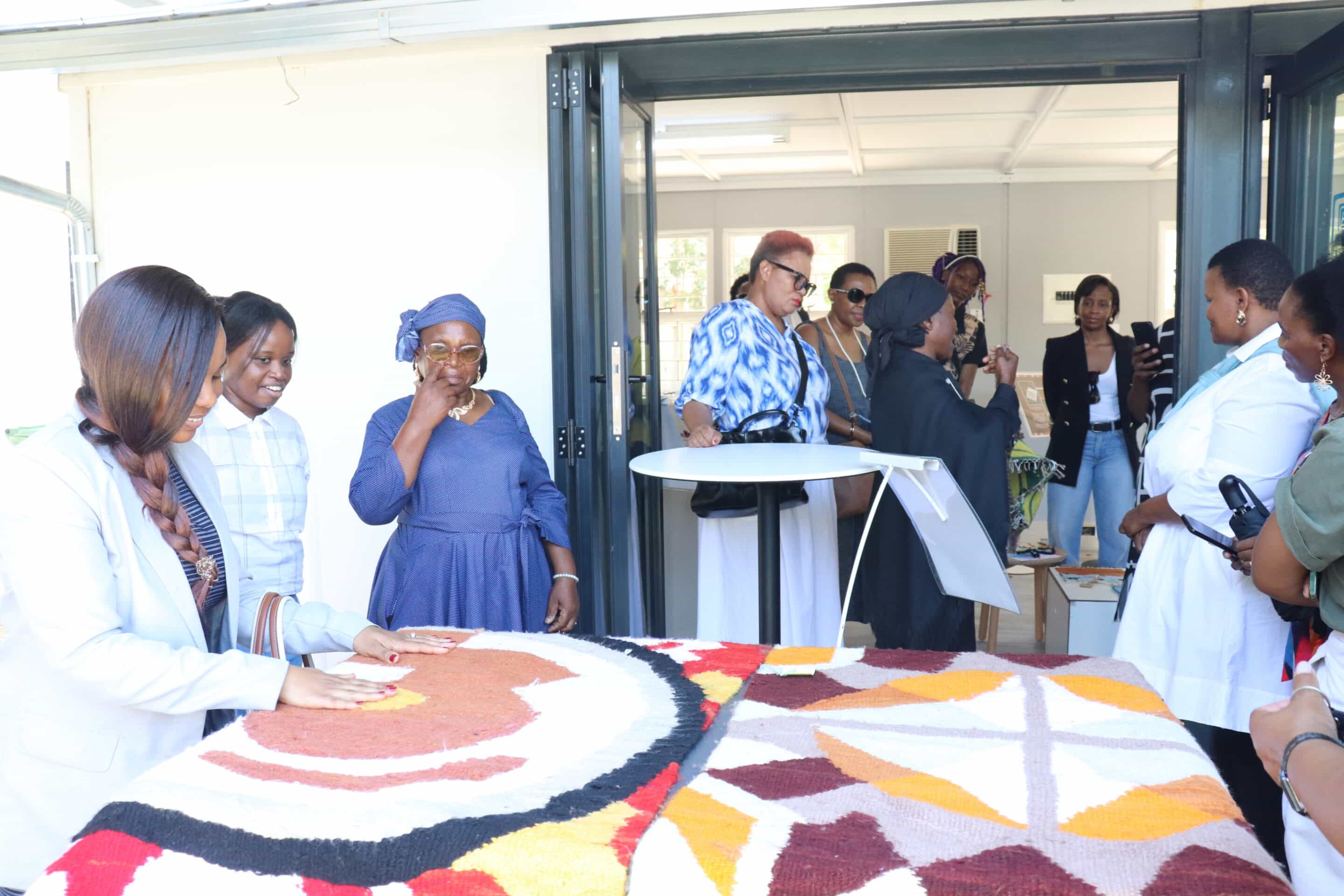
Exhibition at UNIPOD Botswana, University of Botswana
The project culminated in the ‘Heritage Meets Fashion’ exhibition at UNIPOD Botswana, University of Botswana, showcasing 37 woven pieces, from traditional works and newly co-created products. The exhibition celebrated the weavers’ creative journey, increased the visibility of their work, fostered new collaborations, and generated sales opportunities.
Building sustainable impact
The project created lasting social, cultural, and economic value. Participants gained increased confidence, motivation, and pride in their craft, while stronger collaboration and intergenerational knowledge sharing deepened community connections. New product lines and access to wider markets opened further opportunities for income generation and creative partnerships.
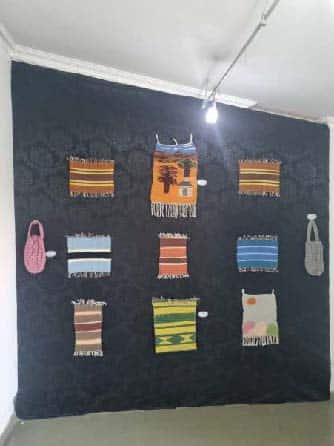
Thapong Visual Centre exhibition
The project’s impact has continued through product sales, ongoing mentoring, media coverage by the University of Botswana news platforms and The Voice Newspaper, and a further exhibition at the Thapong Visual Arts Centre. Together, these activities have raised the weavers’ profile and strengthened their route to new markets.
Dr Keiphe Setlhatlhanyo is a 2010 Commonwealth Scholar from Botswana. She completed her MA in Product Design Innovation Management at Nottingham Trent University.