
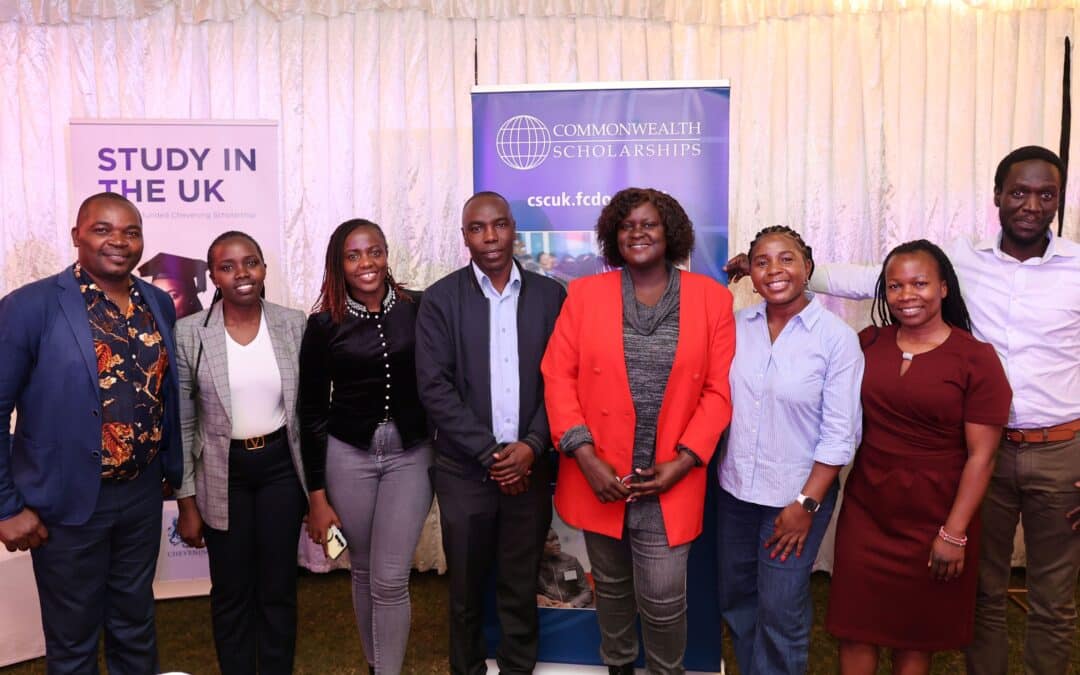
The Kenya Human Rights and Governance Roundtable, held on 20 August 2026, brought together 50 participants for an inclusive, solutions-focused exchange. The event connected Chevening and Commonwealth Alumni with youth leaders, political activists, government officials, civil society organisations, development partners, and international organisations to turn shared concerns about human rights and democratic accountability into practical recommendations for action.
From priorities to practical proposals
Hosted and moderated by Deputy British High Commissioner Dr Ed Barnett, the event put participant priorities at the centre of the discussion. Attendees identified the three human rights issues they considered most important: human rights, corruption and electoral integrity, and issue-based versus ethnic-based politics.
Working under Chatham House Rules, participants formed three groups to examine these key challenges and develop practical recommendations. An expert panel featuring Titus Gitonga, Programme Officer, Transparency International, Sarah Okimaru, Advocate of the High Court of Kenya and President of the Commonwealth Scholarship Alumni Association of Kenya, and Frankline Mukwanja, Executive Director, Centre for Multiparty Democracy then explored the proposals and responded to questions from the audience.
Clear priorities for stronger democracy
The discussions produced a clear set of outputs. Participants called for stronger civic education so that citizens better understand their rights and responsibilities, the role of public institutions, and the routes available to hold leaders accountable. They urged a broader understanding of human rights that encompasses essential services, food security, and a safe and healthy environment alongside civil and political freedoms.
Campaign financing and the growing influence of money and patronage in politics were highlighted as threats to electoral integrity. Participants advocated for stronger accountability mechanisms, transparent electoral administration, responsible policing, and more inclusive political participation, particularly for women and marginalised groups. Development partners were encouraged to use their convening power and relationships with government institutions to raise concerns about serious rights violations, police misconduct and electoral malpractice.
“Electoral integrity extends beyond polling day and depends on campaign-finance transparency, accountable policing, effective electoral administration, and public confidence in institutions.”
Building networks for continued action
The roundtable’s impact extended beyond the recommendations. The audience-driven format provided participants space to shape the conversation, share lived and professional experience, and test ideas with people working across government, advocacy, and development. The expertise of Chevening and Commonwealth Alumni strengthened the quality of the dialogue, while the networking reception created further opportunities to exchange ideas and build professional connections.
Despite the range of perspectives in the room, participants reached broad agreement that civic education, institutional preparedness, inclusion, and accountability are essential to reducing electoral tensions and strengthening democratic resilience. They were encouraged to champion these priorities through their own networks by promoting informed participation, supporting accountability initiatives, and sustaining inclusive dialogue.
By bringing youth voices into direct conversation with decision-makers and practitioners, the roundtable showed how inclusive dialogue can generate practical ideas, deepen collaboration, and build momentum for more accountable governance. The recommendations now provide a foundation for continued engagement and advocacy on the human rights and governance issues affecting young people across Kenya.
If you are a Commonwealth Scholar or Alumnus based in Kenya and would like to get involved in engagement events and opportunities, please contact alumni@cscuk.org.uk for more information.