
Commonwealth Scholarships Make Economic Sense to the UK
The CSC has published a policy briefing paper examining the economic impact of Commonwealth Scholarships on the United Kingdom. This paper is the first in a series of policy briefing papers published by the CSC, and looks at the economic impact of the 2023/24 group of Commonwealth Scholars on the UK economy and considers whether public funding for the programme represents good value for money. The analysis is based on established research by London Economics on international students.
For the 2023/24 cohort, 394 Commonwealth Scholars have studied at 78 universities and institutions across the UK across four CSC programmes. Our study estimates the economic benefits generated by these scholars through their tuition fees, everyday living costs, and spending by visiting friends and family. It also takes account of the public costs, including both the use of public services as well as the direct costs of running the scholarship programme such as tuition fees, living allowances, research and travel grants, and administrative costs.
Overall, the analysis finds a total economic benefit of £34 million generated by the 2023/24 cohort over the course of their studies, compared with total costs of £22 million. This means the programme delivers a net economic benefit of £12 million. Put another way, for every £1 invested, the UK economy gains £1.60 in return.
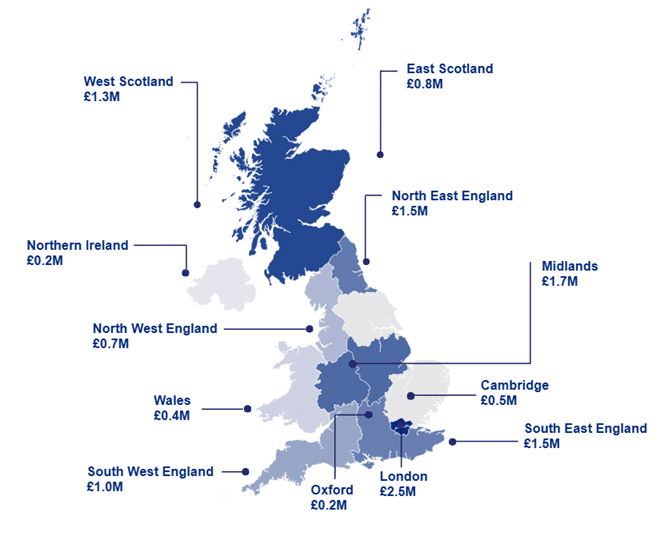
On average, each Commonwealth Scholar contributes around £32,000 more to the UK economy than they cost. Taken together, 32 scholars generate £1 million in net economic benefit over their period of study. This economic impact is also spread across the UK. London sees the largest benefit (£2.5m), followed by Scotland (£2.1m) and the Midlands (£1.7m).
These findings show that Commonwealth Scholarships represent a strong economic investment for the UK, as the programme returns more money to the UK during scholars’ studies alone. This is in addition to all the benefits that occur after their scholarships, including further economic impact and their impact on sustainable development and soft power.
The full policy brief can be read here.