
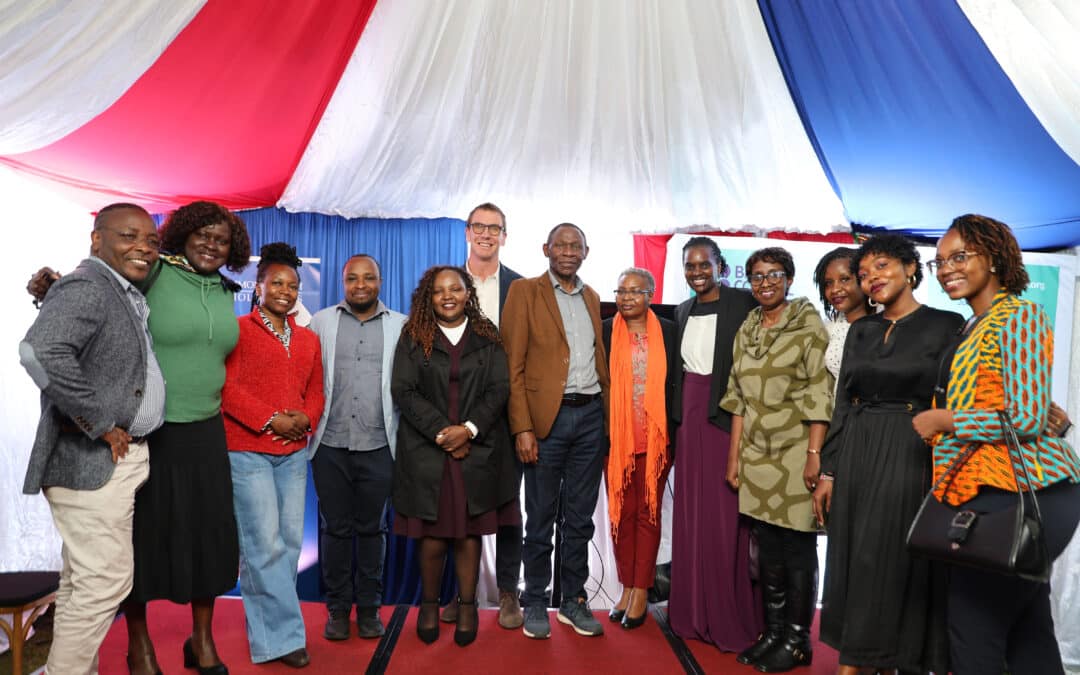
Commonwealth Alumni in Kenya came together for a timely discussion on artificial intelligence (AI), its growing influence on the workplace, and the skills, policies, and safeguards needed to support responsible adoption.
Hosted by the British High Commission in Kenya, the event, ‘AI in the Workplace: Opportunities, Risks, and the Future of Work’, brought together alumni from Commonwealth Scholarships, Chevening Scholarships, and the University of Birmingham, alongside experts in technology, human resources, law, and governance.
Jointly organised to explore emerging trends in AI and its practical application across professional settings, the event also showcased the leadership and expertise of UK educated alumni working in technology, innovation, policy, and workforce development.
AI and the future of work
 Opening remarks were delivered by the Deputy Head of Mission to Kenya, Diana Dalton, followed by a keynote address from Professor Bitange Ndemo, a leading technocrat, immediate former Kenya Ambassador to the Kingdom of Belgium and the European Union, and former Permanent Secretary for ICT in Kenya. He was joined by a panel of specialists including Professor George Musumba, Associate Professor of Computer Science at Dedan Kimathi University of Technology; Johm Faderr, a technology and AI specialist; Wambui Mitine, a lawyer and policy expert; and Waturi Wamboye, a certified HR professional and member of the Institute of Human Resource Management in Kenya.
The panel discussed the impact of AI on jobs, skills, governance, and workplace practice. Speakers considered how AI is already transforming organisations, while acknowledging the potential risks of emerging technologies, including job displacement, bias and discrimination, privacy concerns, data security, and the spread of disinformation.
Building AI for local contexts
A recurring theme was the need for AI systems that respond to local contexts and priorities. Professor Ndemo highlighted the importance of developing localised AI that draws on relevant data, knowledge, and social realities, rather than relying solely on models designed elsewhere. This point was especially important in discussions about AI adoption in Kenya and across the Global South, where technology must reflect local opportunities, infrastructure, and development needs.
The panel also examined the opportunities AI can create for jobseekers and employees, from improving productivity to supporting skills development and enabling people to work more effectively with digital tools. Speakers encouraged participants to think of AI not only as a disruptive force, but as a partner that can help generate better outputs when used thoughtfully and responsibly.
Leading responsible innovation
The discussion was followed by a 45-minute Q&A session, with contributions from attendees in the room and online. The event concluded with reflections from each panellist.
The event closed with a networking session, providing attendees the opportunity to connect across scholarship and university communities. Attendees were also encouraged to contribute their views to the development of Kenya’s National AI Policy, reinforcing the importance of alumni voices in shaping responsible innovation.
A key takeaway from the event was that AI is here to stay, and professionals should engage with it critically, creatively, and responsibly. While participants recognised AI’s potential to improve work outputs and support innovation, they also stressed the need to address ethical, regulatory, and environmental concerns. One issue raised was the environmental impact of data centres, particularly their use of fresh water in regions where this resource is already scarce. Speakers called for AI experts to consider how emerging technologies could help create sustainable solutions, including approaches to desalination and resource-efficient infrastructure.
Through expert discussion, audience engagement and alumni networking, the event demonstrated the value of bringing together diverse professional perspectives to explore one of the defining workplace issues of the future.
If you are a Commonwealth Scholar or Alumnus based in Kenya and would like to get involved in engagement events and opportunities, please contact alumni@cscuk.org.uk for more information.