
Situated on the banks of the Sigatoka River, Lawai is one of eight villages dealing with the increasingly severe consequences of riverbank erosion and flooding. These challenges are not merely environmental; they threaten the physical safety, cultural heritage, and identity of the village community.
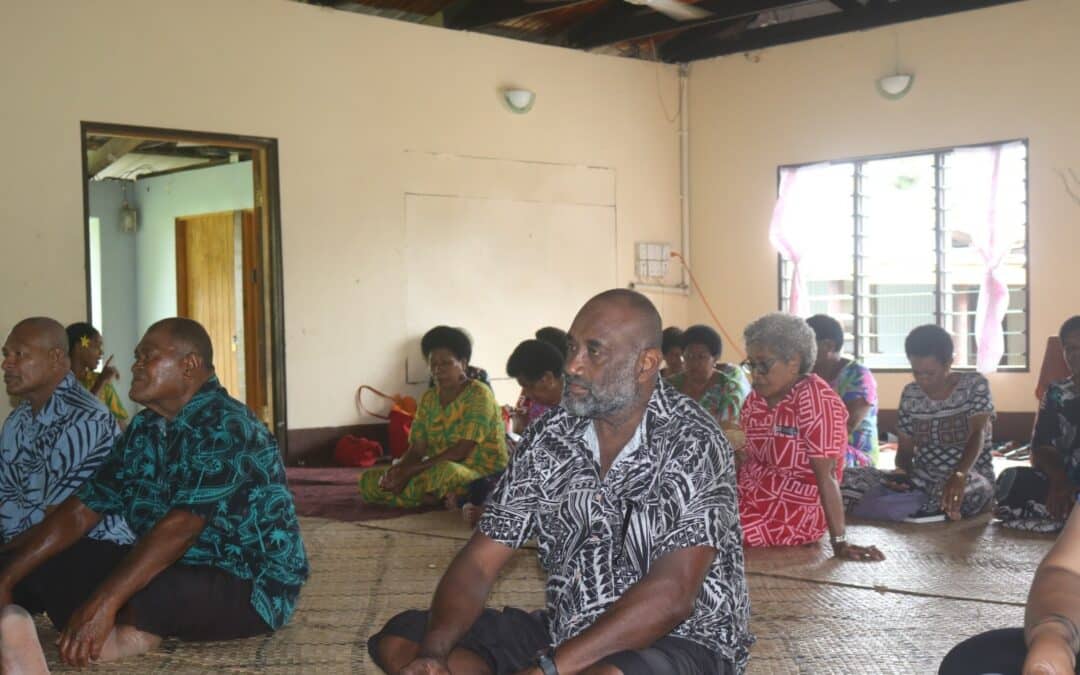
On 11 December 2025, Commonwealth Alumnus Milika Sobey led a Talanoa (a traditional Pacific practice of open dialogue) in Lawai Village on flood mitigation. The event brought together villagers, officials, and cultural experts for a dialogue rooted in both scientific evidence and indigenous knowledge.
Understanding the Crisis: Erosion and flooding in Lawai
Between 1999-2023, the Sigatoka River has receded its banks by 5-15 meters, according to satellite imagery analysed through Digital Earth Pacific. This gradual loss has been punctuated by four major flood events in 1999, 2009, 2012, and 2022. These events have resulted in riverbank collapse in certain areas and sediment accumulation in other sections of the river.
The Talanoa was delivered in two sessions and attended by 47 participants, including village headman, district representatives, and officials from the Ministry of Waterways.
In the first session, Milika used satellite imagery to explain the science behind the erosion, helping villagers visualise the gradual change in their environment. Representatives from the Ministry of Waterways highlighted the importance of satellite data and the Ministry’s plans to conduct field measurements in early 2026. This will provide empirical analysis required to identify options to address the erosion and implement riverbank rehabilitation and flood mitigation.
The presentation bridged the gap between scientific data and lived experience. Whilst aware of the general impact of flooding on their local environment, younger villagers were not aware of the extent to which the village area had been lost due to erosion and the immediate crisis. Older villagers shared memories of their childhood and extensive backyard gardens which no longer exist.
Indigenous leadership and stewardship
After the scientific session, the focus shifted to indigenous leadership and stewardship. Consultant, Mr Simione Sevudredre, delivered a cultural talk, interspersed with the serving of yaqona (a traditional beverage) as per the traditional practice of Talanoa. Participants then engaged in an extended dialogue on the importance of preserving land, culture and identity in environmental stewardship.
The cultural session explored core themes, including the three main pillars of the Fijian village (listed first):
- Identity and Social Structure: Lawai’s social fabric is shaped by communal roles and responsibilities, which can be leveraged for collective action in riverbank rehabilitation.
- The Concept of ‘Vanua’ (Land): Land is not just a physical entity but a source of cultural and spiritual meaning. Protecting “Vanua” is synonymous with safeguarding the community’s future.
- Spiritual and Biblical Foundations: Faith and spirituality were acknowledged as pillars in guiding environmental stewardship, providing motivation and a sense of duty.
- Importance of Memory and Culture: Villagers reflected on how their identity and daily life are tied to the landscape. Preserving these memories is essential for forging a path forward.
- Indigenous Worldview: The session highlighted the value of traditional perspectives, where the land, people, and spirit are interconnected. This worldview informs sustainable practices and resilience in the face of environmental challenges.
- Harmony, Prosperity, and Consequences: The dialogue stressed that harmony with nature yields prosperity, while ignoring environmental issues brings consequences.
Community engagement and next steps
The villagers’ attention and lively participation signaled the importance of the Talanoa and discussions.
Following the session, the district representative has advocated the Provincial Office to host similar talks in the six other villages of the district. Discussions have continued amongst villagers, with many reflecting on the scientific and cultural presentations. Attendees, previously unaware of the erosion’s full impact on their village and way of life, have left with a renewed sense of urgency.
The talanoa revealed an important gap in awareness. Whilst science provided clarity, it was the cultural dialogue that inspired collective responsibility. The synergy of these approaches promises not just technical solutions but sustainable, community-led action.
Looking Ahead: A roadmap for rehabilitation
A follow-up Talanoa is planned for the first quarter of 2026. The Ministry of Waterways will present findings from their fieldwork and offer options for riverbank rehabilitation. After consulting with villagers to select the preferred course of action, the search for donor funds will begin, ensuring that solutions are not only effective but also locally owned and culturally appropriate.
Milika Sobey is a 2000 Commonwealth Scholar from Fiji. She completed a PhD in Nitrogen Cycling in Tropical Lagoons at the University of Essex.