
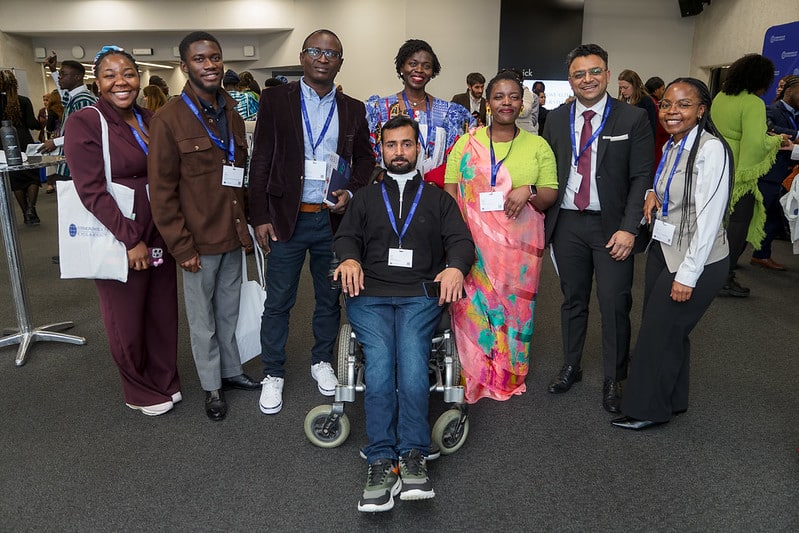
Improving Access to Higher Education for Underrepresented Groups
The CSC has published a policy briefing paper which examines its commitment to improving access to higher education for underrepresented groups across the Commonwealth, aligned with its equity, diversity and inclusion (EDI) priorities and Sustainable Development Goal 4 (Quality Education). Since 2021, the CSC has systematically collected EDI data to monitor progress and inform action, focusing on four key groups: women, people with limited economic means, persons with disabilities, and forcibly displaced people.
Between 2021 and 2025, the CSC has seen overall increases in both applications from, and scholarship selections to, all four groups. Although year-to-year fluctuations are evident, the overarching trend is positive and provides a strong foundation for continued progress under the CSC Strategy 2025–2028, which commits to increasing the proportion of applications from and awards to underrepresented groups on a year‑on‑year basis while sustaining strong gender balance.
For women, applications and selections have consistently increased over the period, but improving access to higher education for females remains a global priority due to disparity in representation at doctoral and post-doctoral levels. For candidates with limited economic means, application rates remained broadly stable, while the proportion of selected scholars rose markedly, bringing it nearly in line with the proportion of applications from this group. Applications and selections from persons with disabilities also increased, with disabled candidates consistently selected at a higher rate than their share of applications. Representation of forcibly displaced people rose from a low baseline, reflecting growing recognition of the educational barriers experienced by refugees and others affected by conflict.
Central to this progress is the CSC’s collaboration with national governments and specialist NGO nominating partners, including Forum for African Women Educationalists, HALI Access Network, the Commonwealth Disabled People’s Forum, and Windle Trust International. The paper concludes that continued UK Government funding is essential to sustain and expand these efforts to support UK development priorities and enable high‑potential candidates from across the Commonwealth to access higher education.
The full policy brief can be read here.