
In The Gambia, Micro, Small, and Medium Enterprises (MSMEs) make up most businesses and provide significant employment. Despite the number of MSMEs, their growth is constrained by inadequate record‑keeping, poor financial decision‑making, and the blending of personal and business finances. This lack of capacity prevents MSMEs from sustaining their operations, expanding their reach, or generating new jobs. As a result, national goals to reduce unemployment, foster economic stability, and promote gender-inclusive growth remain difficult to achieve.

Saikou Jeng
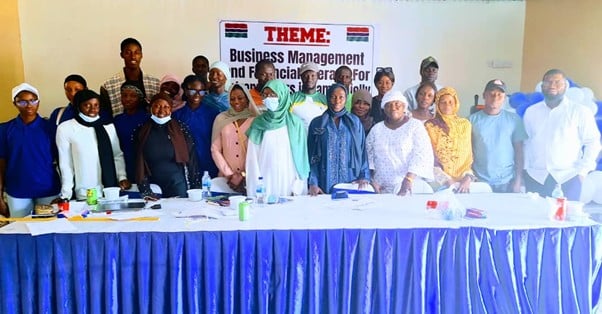
In December 2025, Commonwealth Alumnus Saikou Jeng delivered business management and financial literacy skills training for local entrepreneurs in Jambanjelly, a peri-urban community in The Gambia.
Saikou Jeng is the Executive Director of the National Social Protection Agency, The Gambia.
Strengthening local enterprises
Findings from the 2025 Labour Force Survey by the Gambia Bureau of Statistics reveal that unemployment has climbed to 8.3%, with youth unemployment reaching 11.5%. Women face even greater challenges, experiencing an unemployment rate of 9.2%, higher than their male counterparts. Strengthening the capacity of MSMEs could play a vital role in reducing unemployment.
To address this, Saikou organised a community-based practical business skills training session for 45 local entrepreneurs with MSMEs.
The training aimed to provide participants with tools to help them manage their finances effectively, build stronger and more sustainable businesses, and boost the economic resilience of their community. This was particularly valuable for those running informal businesses and lacking financial expertise, as the training addressed critical gaps in record keeping, making smart financial decisions, and day-to-day business management, areas that have a direct impact on their earnings and overall wellbeing.
Highlights from the training for MSME development
The training was comprised of three sessions and delivered by specialist guest speakers. Session topics were entrepreneurship, financial management, and business sustainability.
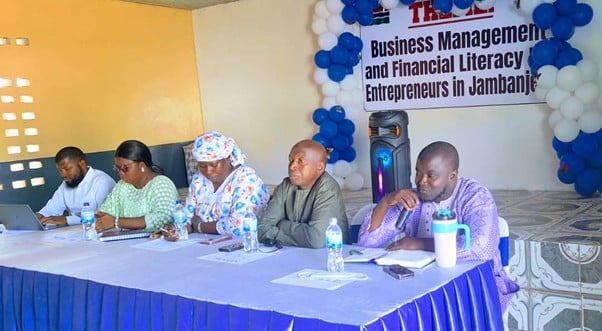
From L-R: Saikou Jeng, Satang Saho Jammeh (Entrepreneur and Guest Speaker), Bintou Bojang (Jambanjelly VDC, Women Entrepreneurship Leader), Famalang Barjo (Jambanjelly VDC Chairman), Bubacarr Jammeh (Office of the Village Chief, Guest Speaker)
Muhammed B Jallow, entrepreneur and Graduate Assistant at University of The Gambia, led the session on ‘Entrepreneurship and business planning’. He guided participants through key topics, including identifying business opportunities, creating simple business plans, and the importance of ethics and resilience for small business success.
Session two centred on ‘Financial management for small businesses’, with participants learning practical record‑keeping, cash‑flow management, pricing, and profitability skills. Entrepreneur Momodou Drammeh, owner of a mobile money wallet business, offered advice on swift savings and leveraging mobile wallets.
The final session focused on ‘Access to finance, growth, and sustainability’, covering credit options, marketing strategies, and customer relations. A lively role play showcased best practice in customer care, while guest speaker Bubacarr Jammeh highlighted the positive role and impact of entrepreneurship on community wellbeing. The programme wrapped up with participants presenting their business growth action plans.
Alongside the session facilitators, the training received strong backing from local leaders. Mr Famalang Barjo, Chair of Jambanjelly VDC, pledged ongoing support and plans to replicate the initiative. Mrs Bintou Bojang, Women Entrepreneurship Leader, encouraged disciplined financial habits—especially among women—and committed to future trainings. Village Chief Bubacarr Jammeh officially endorsed the programme and offered his office’s support for more frequent sessions. Entrepreneur and CEO Mrs Santang Saho shared practical advice, championed resilience, and urged women to break social barriers in business.
Monitoring outcomes and scaling the initiative
Saikou assessed the training’s effectiveness through participant reflections, which revealed greater awareness of financial discipline and record-keeping, and understanding of how to apply these skills to develop their businesses. Several participants reported immediate behavioural changes, such as consistently recording expenses and treating their businesses as independent entities.
To measure longer‑term outcomes, Saikou will conduct follow-up visits and use questionnaires to determine if participants are putting their new financial and business skills into practice, and to pinpoint where extra support is needed.
As a result of Saikou’s initiative, the VDC and Office of the Alkalo are working to broaden the programme, aiming to reach more participants and collaborate with regional and national partners for advanced training.
Saikou Jeng is a 2023 Commonwealth Scholar from The Gambia. He completed a MSc in Economics from the University of Kent.