
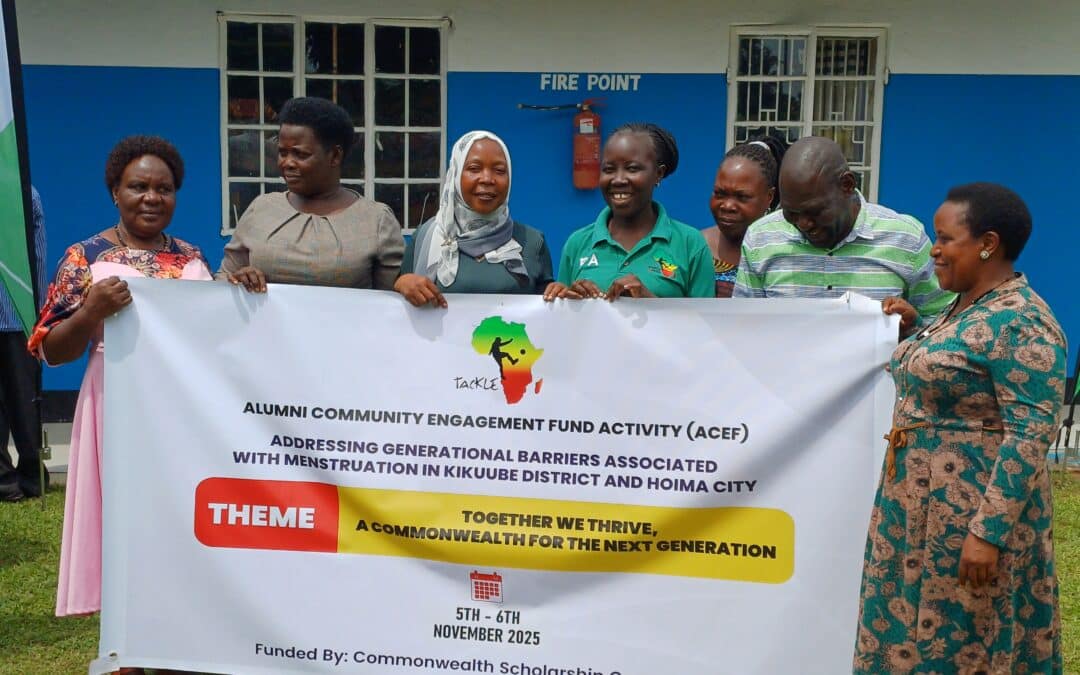
Menstrual Health and Management (MHM) remains a major challenge for Ugandan girls, with 90.5% lacking adequate support (Ballard Brief 2021). Barriers such as poor WASH facilities, limited menstrual products, stigma, and low awareness undermine girls’ health, dignity, and education, causing many aged 12–15 to miss school or drop out during menstruation. Despite ongoing interventions, caregiver involvement remains low, highlighting the need to break stigma, foster empathy, and strengthen community support.

Peace Patricia Aanyu
On 5-6 November 2025, Commonwealth Alumnus Peace Patricia Aanyu convened communities in Hoima and Kikuube District, Uganda, for a two-day workshop exploring menstrual health awareness for adolescent girls and young women (AGYW).
The workshop aligned with the 2025 International Day of the Girl Child theme, ‘The girl I am, the change I lead: Girls on the frontlines of crisis’, celebrating girls’ leadership in challenging gender barriers and become agents of change in their communities.
Peace Patricia Aanyu is Senior Programme Officer at Tackle, which uses football to promote HIV and Sexual and Reproductive Health Rights (SRHR) awareness. She was supported by colleagues from Tackle, Chrispus Muganyizi, Gilbert Kugonza, and Wandera Fred.
Taking a community approach
Peace hosted a lively two‑day dialogue at the Mother’s Union Conference Hall in Hoima City and the Kikuube Community Hall in Kikuube District. The workshop brought together 69 participants from six schools, along with parents, teachers, district officials, and civil society organisation (CSOs), including the Hoima Network of Child Rights Clubs (HONECRIC) and Hoima Women Health Support Organisation (HOWHESO). This enabled Peace to share key menstrual health awareness with caregivers and stakeholders.
The workshop featured interactive sessions, including a demonstration drill, video testimonials, panel discussions, and plenaries. Peace convened eight panellists representing community stakeholders including, education leaders, Ms Fatumah Kirokimu, Principal Education Officer in Hoima City and Ms Sarah Nakamadi, Inspector of Schools in Kikuube District; two AGYW students, parent representatives, and representatives from CSOs, Ms Catherine Kobusinge (HONECRIC), Mr Fred Wandera (Tackle) and Ms Beth Mbabazi (HOWHESO). Their varied perspectives enriched the discussions on MHM.
Panel discussions tackled tough questions, including: What barriers do girls face during menstruation? How can parents and communities help? What is already being done, and what more can be done to address these barriers?
Engaging in open and honest discussions
Over two days, panellists and participants shared personal experiences and practical ideas to strengthen MHM programmes.
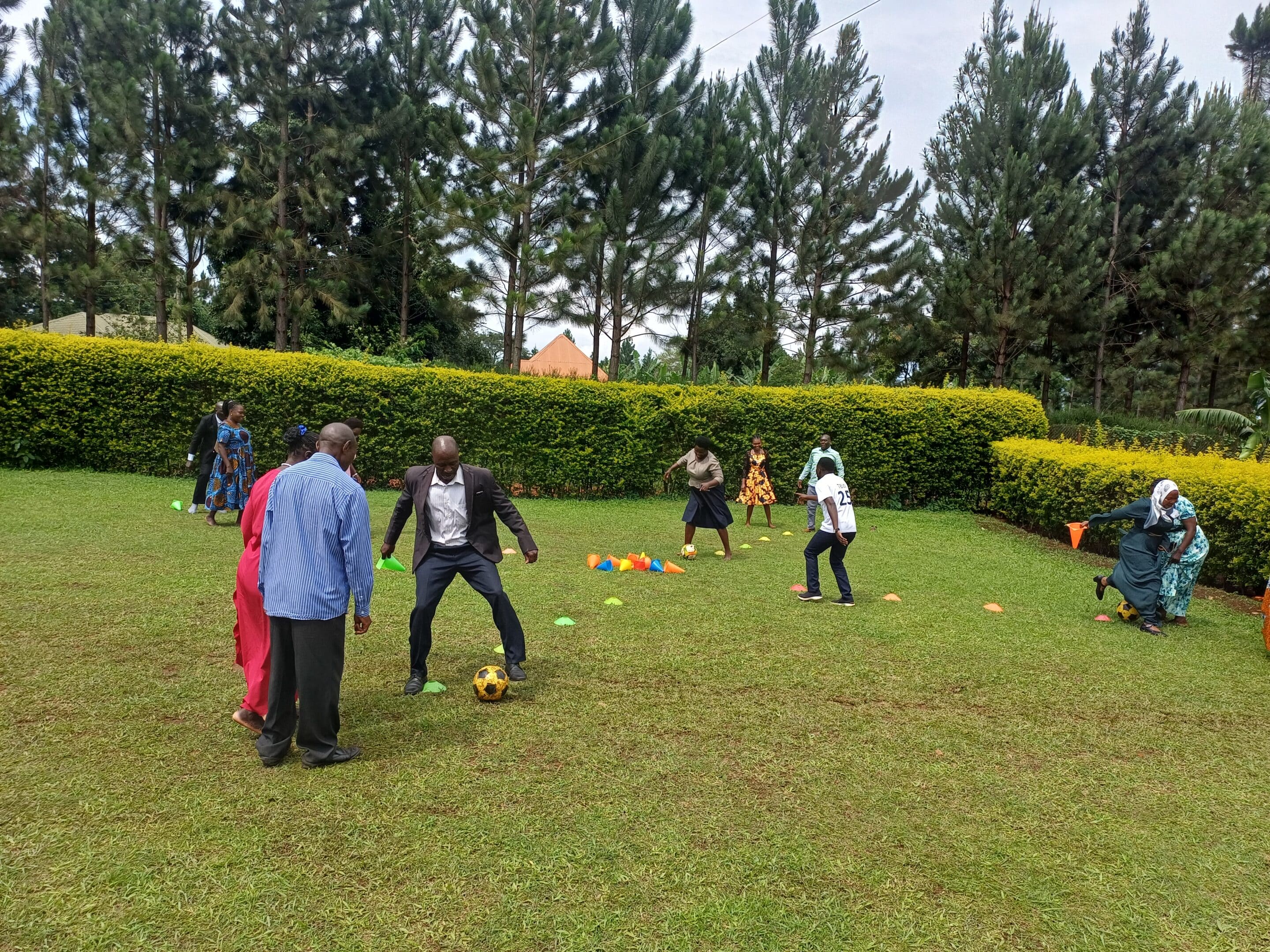
Parents in Hoima City participate in football-based activities
Tackle’s Gilbert Kugonza led the ‘Proud of my period’ drill, showing how football based activities can make menstrual health education engaging and accessible. Participants also viewed video testimonials from young women, which helped build confidence and spark open dialogue.
AGYW spoke candidly about challenges such as shame, isolation, limited menstrual products, and poor school facilities. They called for clear, age‑appropriate MHM language in schools and urged government to provide free sanitary products to support girls’ dignity and continued education.
“The government should train the district health and education departments on menstrual health and hygiene so they can provide proper WASH services and facilities in schools. In addition, it should also provide every girl with free reusable pads and menstrual cups which are durable products that will ensure the girl menstruates with dignity.”
-Student AGYW representative from Kikuube
Advancing menstrual health through dialogue and inclusion
In Hoima, Mr Tibaingana highlighted parents’ challenges in supporting girls during menstruation, including emotional strain, financial pressures, and persistent taboos that restrict girls’ activities.
“Parents need to talk about menstruation as a family and ensure the budget for sanitary products is planned for like other household items. Being open about menstruation and normalising the conversation in families builds trust.”
Mr Phillip Tibaingana
Catherine Kobusinge of HONECRIC noted additional barriers such as religious beliefs, poor WASH facilities, and limited male involvement, while emphasising the value of radio programmes, school clubs, reusable pad training, and teacher advocacy, alongside involving boys and men through sport.
In Kikuube, Inspector of Schools Ms Sarah Nakamadi underscored policies requiring separate female washrooms and commended partners for improving facilities.
Plenary discussions also addressed harmful community myths and encouraged greater awareness raising through radio, as well as budgeting for spare clothes and sanitary products in schools.
“As development partners, we have given less attention to boys in community development programmes. This is causing harm in terms of information, skills and knowledge gap. We should not discriminate boys in menstrual health and hygiene programmes including reusable pad making. Limited housing spaces has made it difficult for girls to freely hang their panties and reusable pads since menstruation is stigmatised. I call for normalisation of conversations on menstruation.”
Ms Beth Mbabazi, Executive Director at HOWHESO
Fred Wandera underscored the need to break generational barriers and normalise menstruation, highlighting Tackle’s efforts in teacher training, reusable pad making, and distributing durable products to support girls’ dignity, safety, and education.
Committing to change
Peace measured the impact of the dialogues by tracking participation, stakeholder pledges, personal stories, and shifts in awareness, with pre‑ and post‑workshop findings showing myths replaced by stronger knowledge and greater recognition of the need to involve boys and men.
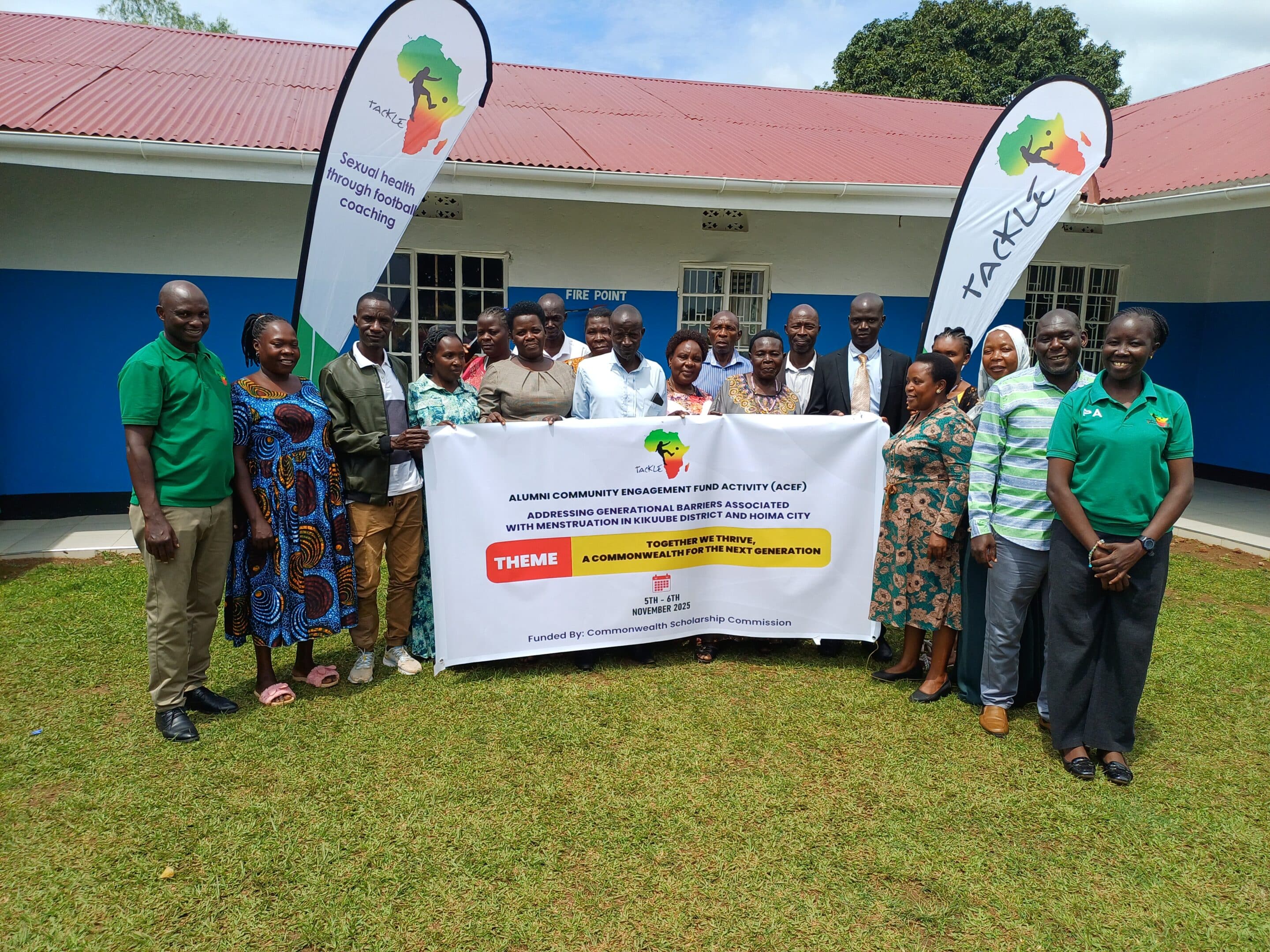
Peace Patricia at the extreme right with workshops participants in Hoima City
Participants pledged to discuss menstruation openly at home, integrate MHM into PTA meetings, address policy gaps, advocate for male involvement in menstrual education and programmes, and use community platforms to normalise conversations.
Across two days in Hoima City and Kikuube District, AGYW, parents, teachers, officials, and civil society united to challenge stigma and drive action.
Peace will continue working with schools and stakeholders to strengthen menstrual health awareness, with calls for wider community dialogues and expanded radio and mass‑media messaging.
Peace Patricia Aanyu is a 2023 Commonwealth Professional Fellow from Uganda. She completed her Fellowship at Tackle Africa.