
Date: 10-12 April 2026
Join a residential workshop on maximising development impact
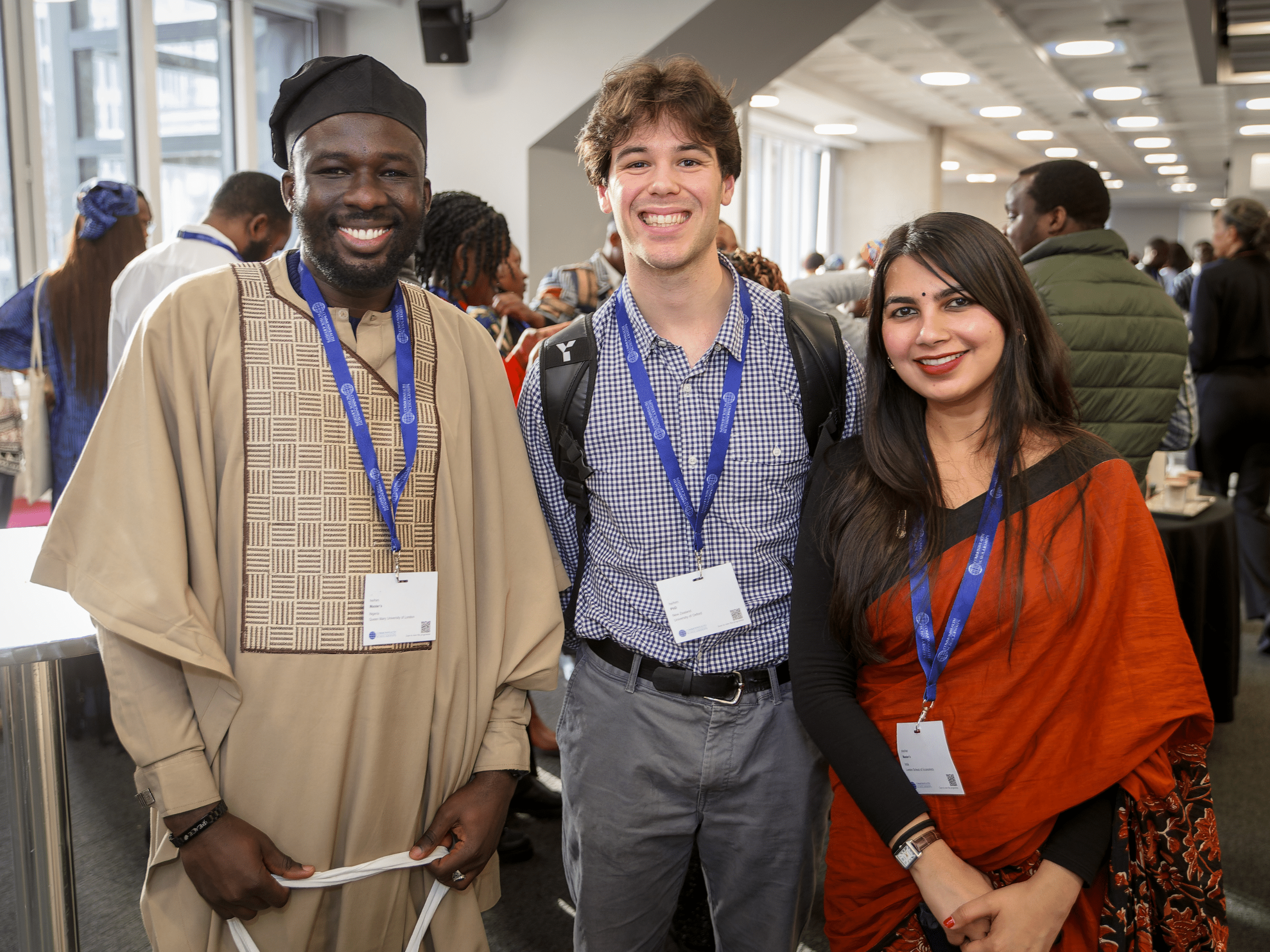
This three-day residential workshop will focus on contemporary issues in development and provide skills training to support Scholars’ development impact work through a mixture of plenary sessions, discussions, and individual and group activities.
During the workshop, Scholars will:
- Improve skills and knowledge for development impact in their home country.
- Reflect on how to make their current studies and research more development relevant.
- Develop their presentation and teamwork skills.
- Improve their ability to connect and communicate with a wide range of audiences for development impact.
- Explore activities and resources that can be used during their scholarship in the UK and in their home country to support development impact.
- Design a plan of action for achieving development impact through their research and future career activities.
This workshop is for Commonwealth Scholars studying at Master’s level only.
The CSC’s Leaders in Sustainable Development programme of workshops focus on professional and practical skills and are designed to be interactive, with small groups of Scholars and Fellows taking part in each event.
Please visit the delegate page to find out more about the residential weekend. Please note that this page is only available to Scholars who are confirmed to attend.
Farhana Mustari
Farhana Mustari is a development professional and environmental policy practitioner currently serving as Deputy Director at the Department of Environment under the Ministry of Environment, Forest and Climate Change, Government of Bangladesh. With over a decade of experience in environmental governance, she has contributed extensively to national policy development, biodiversity conservation, biosafety regulation, and climate resilience initiatives.
Her work spans both national and international domains, including active engagement in multilateral environmental processes such as the Convention on Biological Diversity (CBD), United Nations Convention to Combat Desertification (UNCCD), and global negotiations on plastic pollution. She has represented Bangladesh in several high-level forums, contributing to evidence-based policy dialogue and advancing the interests of environmentally vulnerable countries.
Farhana plays a key role in implementing major environmental projects. She serves as Project Director of a Global Environment Facility (GEF)-funded initiative on ecosystem-based management in Ecologically Critical Areas, focusing on restoration, conservation, and community-based sustainable livelihood development. In parallel, she is the National Project Coordinator for a UNEP-supported regional biosafety programme, strengthening institutional and regulatory capacity for the safe use of modern biotechnology across multiple Asian countries.
A former Commonwealth Scholar, Farhana holds an MSc in Environmental Science from the University of Aberdeen, United Kingdom. Her academic training has strengthened her expertise in evidence-based decision-making, environmental assessment, and policy analysis. She has also contributed to scientific research and national reporting under key international environmental conventions.
Farhana’s professional approach integrates scientific rigor, community engagement, and policy innovation. She is committed to promoting inclusive, sustainable, and resilient environmental governance systems in Bangladesh while contributing to global environmental diplomacy.
Dr Olive Sabiiti
Dr Olive Sabiiti is a Vice Chancellor of Cavendish University Uganda and an Advocate of the High Court of Uganda. Dr Olive Sabiiti is a distinguished academic leader, legal scholar, and professional whose career spans higher education, legal practice, and local governance.
A former Commonwealth and British Chevening Scholar, Dr Sabiiti holds a PhD in Law and an LLM in International Business Law (with Merit) from the University of Manchester, UK. She also holds a Postgraduate Diploma in Legal Practice from the Law Development Centre (Uganda) and a Bachelor of Laws (LLB, Hons) from Makerere University, Uganda.
She is passionate about the Scholarship of Teaching and Learning (SoTL) and the transformative role of technology in higher education. Her research interests include Comparative Law, Land Rights, and Climate Change, explored through the lens of New Institutional Economics. Her academic career includes teaching positions at the University of Manchester, Makerere University, Uganda Christian University, and Cavendish University Uganda, where she served as Dean of the Faculty of Law and Deputy Vice Chancellor (Academic Affairs) prior to her current role. Dr Sabiiti’s background in governance, which includes serving as Speaker of Mpigi District Local Government Council for two terms, Chairperson of the National Association of District Council Speakers, and Chair of the Conflict Resolution Committee of the Uganda Local Governments Association (ULGA) has significantly shaped her leadership.
With nearly two decades of legal practice, she is an active member of the Uganda Law Society and the East Africa Law Society. She represents Cavendish University Uganda at the International Association of Law Schools, currently serves on the Board of the Research and Education Network for Uganda (RENU) and RENU Financial Services (RFS). She is also serving a second term (2023–2025; 2025-2027) on the Commonwealth Scholarship Commission Alumni Advisory Panel and is a member of the Executive Committee of the Uganda Vice Chancellors’ Forum.
As Chairperson of the Strategic Committee of the East African Hub of the Education Collaborative, Dr Sabiiti is committed to advancing transformative education, encompassing entrepreneurship and ethical leadership. Her work reflects a sustained dedication to improving learning outcomes, expanding access to quality education, and creating pathways for global engagement for learners.
Professor Robin Mason ORB
Professor Robin Mason is the Chair of the Commonwealth Scholarship Commission in the UK (CSC) and the Accounting Officer of the CSC.
Robin is Pro-Vice-Chancellor (International) at the University of Birmingham and is responsible for all aspects of the university’s global engagement. He is also the executive lead for LGBT+ equality in the University.
He has held senior leadership positions in higher education since 2006 and has been a member of the executive board of two UK Russell Group universities. As Chair, Robin is responsible for ensuring the CSC makes good decisions (consistent with UK Government priorities) and for ensuring the Commission develops and implements an effective strategy.
Robin is firmly committed to the mission of the CSC – to provide opportunities for talented and motivated young people who could not otherwise afford them – having himself been educated from the age of 11 thanks entirely to scholarships.
Robin’s academic research concentrates on the incentives faced by economic agents in situations where they have imperfect information about their environment. Formally, his area is game theory with incomplete information and learning.
He is a decision-making member of the Competition Appeal Tribunal and the Financial Conduct Authority.
He has acted as advisor to a number of regulators, in both the UK and internationally; to the Prime Minister of Mauritius on competition policy; and to a number of private-sector companies worldwide.
Professor Kevin Ibeh
Professor Kevin Ibeh is the Lead Commissioner for Marketing, Communications and Brand, and a Professor of Marketing and International Business at Birkbeck, University of London. His work focuses on advancing internationalisation, international entrepreneurship, and international investment activities among firms as pathways to sustainable economic development.
These themes, along with the rise of African multinationals, have been central to his consulting and advisory engagements with organisations such as the World Bank, the OECD, the African Union Commission, and UNCTAD.
He serves as the Lead Series Editor of the Palgrave Series of Entrepreneurship in Africa and, alongside holding senior leadership roles in the UK higher education sector, has contributed his expertise to universities and organisations across Africa, Europe, and beyond.